The Bengali Who Knows Too Much to Move
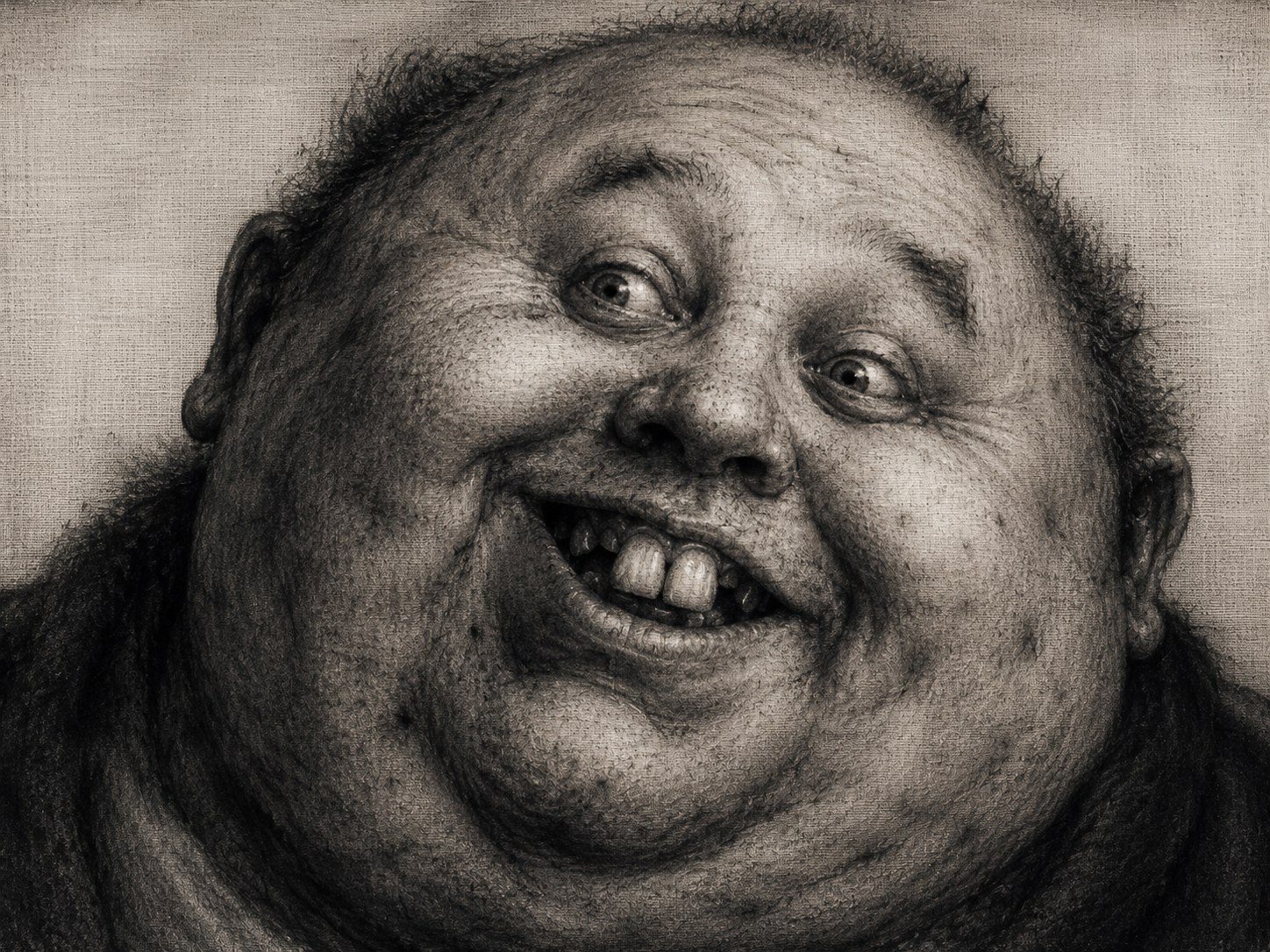
The danger begins when a Bengali man discovers he can explain his failure elegantly.
That is the first small crack in the dam. After that, whole neighborhoods may drown.
I am not speaking here of every Bengali. Please keep the emergency committee in its cupboard. Do not summon the cultural guardians with shawls, harmoniums, and complicated facial expressions. I am speaking of a particular Calcutta creature: the over-read, under-employed, tea-softened, morally restless Bengali man who has turned delay into a domestic art form. He may live in a room where the fan sounds like an old tram taking a turn near Shyambazar. He may own too many books and too few clean shirts. He may know three explanations for his misery and not one reliable method for washing his bedsheet before it acquires citizenship.
This animal is not rare.
In Bengal, he breeds indoors.
Other people fail simply. A man loses money. A man drinks too much. A man buys a foolish plot of land near a future airport that remains future in the same way immortality remains future. But the Bengali overthinker does something more ornate. He upholsters failure. He puts curtains on it. He places a framed quote over it. He says, “The real issue is structural,” while the gas cylinder is nearly empty and the bathroom bucket has begun to look at him with disappointment.
He does not fall into a ditch.
He first studies the history of ditches.
Then he explains that the ditch is a colonial category imposed upon indigenous unevenness. Then he criticizes those who wish to cross the ditch as vulgar careerists. Then he sits beside it with tea. By evening, mosquitoes have eaten his ankles, the sensible people have gone home, and he is still saying, “But the deeper question is…”
No phrase has murdered more Bengali afternoons than “the deeper question.”
Depth is where we hide when the surface demands work.
The surface is rude. It asks for invoices, phone calls, bathing, forms, repairs, deadlines, vegetables, appointments, discipline. The surface says, “Send the email.” The Bengali mind says, “Before sending, we must examine why email as a medium has destroyed civilization.” The surface says, “Pay the bill.” The mind says, “Electricity itself is an interesting metaphor for uneven modernity.” The surface says, “Get up.” The mind says, “Define up.”
Meanwhile the day, that poor unpaid servant, leaves quietly.
Calcutta is full of such small disappearances. Morning becomes afternoon with no announcement. A vegetable seller shouts below the window. Somewhere pressure cookers release their short, bossy screams. A child is forced through multiplication tables by a mother who has the voice of a police inspector and the patience of a saint who has taken a wrong bus. A crow lands on the cable outside and judges the entire lane. Inside, a man with a decent education and a collapsing schedule sits on the edge of his bed and thinks about civilization.
This is how the trouble starts.
Civilization is too large a word for a man who has misplaced his nail cutter.
The Bengali middle-class male was trained for grand abstraction. Empire taught his ancestors paperwork, obedience, argument, English, law, suspicion, and the useful trick of sounding superior while occupying a small chair. Later came politics, literature, science, cinema, football, revolution, theory, and the permanent suspicion that practical people are somehow morally inferior. The shopkeeper may have money, the engineer may have a flat, the trader may have a car, but our man has a sentence.
A fine sentence.
Balanced, polished, tragic, slightly long.
Unfortunately, the fishmonger will not accept it.
That is the wound. Language feels like action because it produces heat. You speak, your chest expands, the room listens, someone nods, someone objects, tea arrives, and suddenly the air has the texture of importance. But nothing has moved except air. The roof still leaks. The proposal is still unwritten. The appointment is still not made. The bank still wants its document. The rice still waits in the container like a tiny white committee of accusation.
Rice is a brutal philosopher.
It refuses symbolism.
We may call it mother, soil, memory, famine, revolution, river, harvest, Bengal, nation, childhood, and grandmother’s kitchen. Rice listens politely. Then it says, “Wash me. Add water. Turn on the stove.” If you do not perform the vulgar ritual, it remains grain. Not poetry. Not culture. Grain.
This is why cooking has more wisdom than many seminars.
A potato does not become curry by ideological sympathy.
The Bengali self-saboteur knows this, which makes the comedy darker. He is not stupid. Stupidity has a soft pillow in it. A stupid man fails and does not understand why. Our man fails and writes the postmortem in excellent prose. He can identify the trap, describe the trap, compare it to three other traps in European history, and then sit inside the trap because leaving would require two phone calls and a bath.
There are men who know nothing and move.
There are men who know something and move carefully.
Then there is our man, who knows too much and becomes furniture.
His brain is not empty. That would be easier. His brain is crowded like a local train before Durga Puja. Marx is hanging near the door. Tagore has a window seat. Darwin is trying not to make eye contact. Satyajit Ray is observing the lighting. Freud is making everyone uncomfortable. Ambedkar is asking the only sensible question. A football coach, a failed poet, three schoolteachers, one ex-lover, and a suspicious uncle are all shouting at once. Somewhere in the corner, the actual task — send invoice, shave, repair phone, look for work — is being crushed under a suitcase.
So he thinks.
Thinking is the cheapest intoxication. No excise duty, no police raid, no hangover except life.
And what thinking! He can discuss mathematics, elections, cinema, medicine, cricket, medieval land revenue, quantum uncertainty, the best way to fry eggplant, why capitalism is obscene, why socialism became a clerk with bad breath, why modern dating is a vegetable market with ring lights, and why everyone else is shallow.
Then the doorbell rings.
He freezes.
The old auntie downstairs has sent someone to collect maintenance.
No theory survives maintenance.
One can make an equation of this, because the Bengali mind cannot resist turning even its underwear drawer into a framework. Let be the Bengali Self-Sabotage Index.
Here is thought, is avoidance, and is work actually completed.
When and rise while approaches zero, becomes enormous. Past a certain limit, the man undergoes a phase change. He is no longer solid, liquid, or gas. He becomes adda.
Adda is not conversation. Conversation has the decency to end.
Adda is a weather system.
It begins with a topic and ends with the collapse of punctuality. Someone mentions a book. Someone says the book is overrated. Someone says overrated by whom. Someone says the problem began in the nineteenth century. Someone mentions the Left. Someone mentions America. Someone mentions Bengal’s lost glory. Someone says, “Actually, the real problem is our mentality.” At this point a small bell should ring and a nurse should enter with sedatives.
But no nurse comes.
Only more tea.
The genius of adda is that it gives the sensation of movement while keeping everyone safely seated. It is a treadmill for the tongue. After two hours, the group has covered history, politics, morality, cinema, football, and the moral decline of fish. Nobody has bought vegetables. Nobody has written the application. Nobody has fixed the leaking tap. But everybody feels exercised.
This is Bengal’s old conjuring trick: sweatless exertion.
I should not mock too much. I belong to the species. I know the smell of the room at 2:30 in the afternoon when the whole city seems to be sleeping with one eye open. I know the cracked mug, the unfinished notebook, the small financial panic that sits behind the ribs like a patient lizard. I know the shame of not doing simple things. Simple things are the dangerous ones. A grand tragedy gives you a shawl. A small task gives you a deadline.
The small task is where dignity slips.
You can survive a philosophical crisis and still be defeated by renewing a document.
You can understand mortality and still postpone trimming your nails.
You can see through society and not see the towel drying badly behind your own door.
That is the comic knife. Insight does not automatically become conduct. A man may know the map and still refuse to walk because the sun is strong, the road is muddy, the shoes are somewhere under the bed, and the mind has produced a convincing essay against footwear.
The Bengali self-saboteur is often praised as sensitive. Sometimes he is. Often he is merely porous. Every insult enters. Every slight ferments. Every missed chance becomes a museum exhibit with guided tours. He remembers a sentence someone said in 1997 with the devotion other people reserve for property papers. He has archives of humiliation, arranged by year, smell, and emotional weather.
This is not memory.
This is hoarding with better vocabulary.
And because action may expose him, he prefers judgment. Judgment is safer. If he tries and fails, the world sees the crack. If he does not try, he can remain secretly magnificent. That secret magnificence is a dangerous narcotic. It says, “You could have done great things under better circumstances.” Perhaps. But better circumstances are shy animals. They rarely enter rooms where the curtains smell of defeat and the man inside is arguing with 1989.
There is poverty here too, not as decoration, not as noble suffering, but as daily sand in the gears. Poverty makes every action heavier. A rich man procrastinates and calls it burnout. A poor man procrastinates and the floor opens. One unpaid bill grows teeth. One delayed repair becomes a second problem. One bad month breeds a litter. Soon the man is not managing life but negotiating with small fires.
Then depression arrives like damp.
Not dramatic rain. Damp. Quiet. Persistent. It enters books, bones, clothes, plans. It makes the bed persuasive. It turns bathing into a border crossing. It turns phone calls into court summons. It turns the future into a badly lit corridor with no fan.
The Bengali mind, already fond of loops, becomes a ceiling fan of misery.
Round and round.
Still no breeze.
So yes, there is tenderness in this ridiculous man. That is the nuisance. If he were merely lazy, we could dismiss him. If he were merely vain, we could laugh and leave. But he is often frightened, ashamed, tired, lonely, clever, and trapped inside a skull that has become a committee room with no exit sign.
Inside him, every wish requires permission.
The wish to work rises. The committee on futility objects. The department of past embarrassment submits evidence. The finance office reports low funds. The body demands food. The back complains. The teeth threaten legal action. Desire arrives late and behaves badly. Sleep refuses to cooperate. Anxiety circulates a memo. By the time the matter is tabled, the day has gone home to its family.
Nothing passes.
Except time.
Outside, India keeps moving in its crooked, noisy, neon way. People sell, scam, pray, code, build, demolish, advertise, migrate, marry, boast, vote, curse, and survive. A delivery boy rides through rain with someone’s biryani in a box. A shopkeeper calculates faster than a software engineer. A mason climbs bamboo scaffolding in slippers. A nurse does twelve hours of practical mercy. A mother stretches one salary across school fees, cooking oil, medicine, and the electric bill with the grim magic of a circus performer.
Meanwhile our man sits and says society has declined.
Naturally society has declined. But so has his toothbrush.
This is the part I cannot forgive in myself or in him. We mistake diagnosis for repair. We believe that seeing the disease is a kind of treatment. It is not. The doctor who identifies a fracture and then goes for tea has not helped the leg. The man who sees through hypocrisy but cannot keep one promise has not become wise. He has only acquired X-ray vision in a collapsing house.
Seeing through is not getting through.
That sentence should be printed on the walls of every Bengali sitting room, right above the calendar and below the tube light.
Seeing through is not getting through.
You may see through politics, religion, markets, masculinity, family drama, professional networking, motivational nonsense, and your own self-deception. Excellent. Have a biscuit. Then what? The rent still wants money. The body still wants care. The work still wants hours. The world, with its usual lack of literary taste, continues to reward people who show up.
This is insulting.
It is also true.
I do not want to turn this into a motivational poster. Those are spiritual mosquito coils: much smoke, little protection. The solution is not to become a grinning LinkedIn cucumber announcing “Five Lessons From My Failure Journey.” That would be another disease. The point is smaller and less glamorous. Send one email. Wash one cup. Make one call. Cut one nail. Pay one bill. Cook one meal. Move one object from the floor to the shelf. Rescue one square foot of life from the republic of decay.
Not revolution.
Housekeeping.
A civilization may begin there.
Perhaps Bengal’s curse is that it loves the epic and neglects the broom. We adore the large word, the tragic song, the sweeping theory, the historical wound, the intellectual pose. But life is cunning. It hides its examination in small, shabby tasks. The bucket. The bill. The form. The appointment. The morning. The body. The room.
If you fail there, your grand theory begins to smell.
By late afternoon, my tea has gone cold. A skin has formed on top, not tragic enough for poetry, not useful enough for science. The lane below smells of frying oil, wet dust, drain water, and coriander pretending to improve civilization. Somewhere a pressure cooker whistles with more discipline than I have shown all week. A crow lands on the wire outside and looks in, as if sent by the municipality to inspect moral collapse.
I consider doing something useful.
This is always the dangerous moment.
The mind reaches for an essay. The hand reaches for a biscuit. The body votes for postponement. The room waits, patient and slightly disgusted.
Then, for no noble reason, I pick up the cup and carry it to the sink.
A small act.
Almost nothing.
But in Bengal, almost nothing is sometimes where the revolution has been hiding, embarrassed by all the speeches.